What Building Materials Distributors Need From a Dedicated Fleet Partner
April 1, 2026
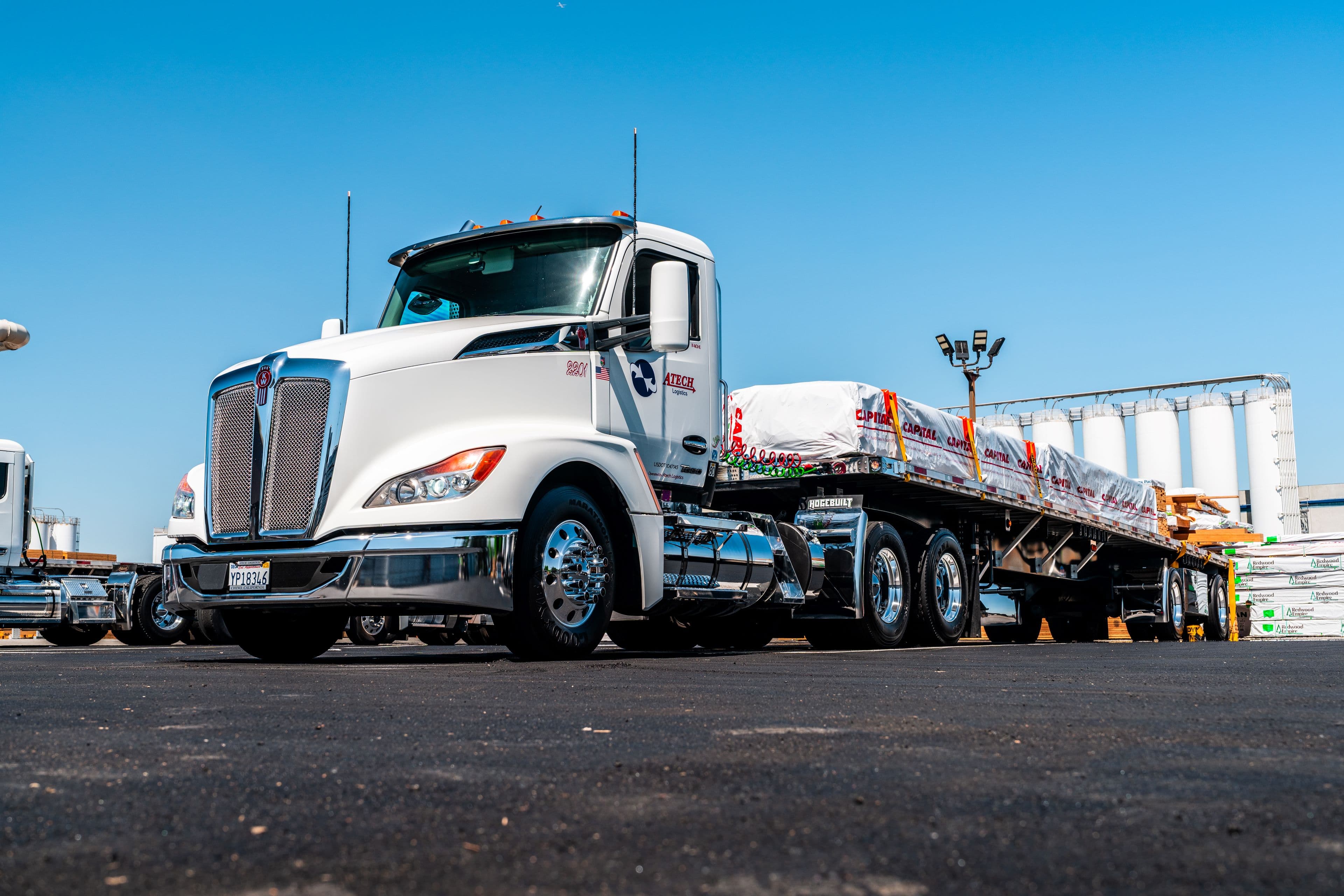
Building materials distribution operates on tight timelines. Jobsite schedules, contractor coordination, and regional delivery windows leave little room for transportation variability.
When freight supports construction, reliability is not a convenience — it is operational infrastructure.
Unlike consumer freight, construction materials are tied directly to labor schedules, project sequencing, and customer commitments. A missed delivery does not simply impact a dock appointment — it can idle crews, delay inspections, and cascade across an entire build schedule.
Early-Morning Precision Is Not Optional
Many building materials networks depend on early-morning deliveries. Contractors expect product to arrive before crews begin work.
A missed delivery can idle labor, delay project timelines, and strain customer relationships. When multiple trades are coordinated on-site, timing becomes critical.
Dedicated fleets reduce variability by assigning consistent drivers, establishing repeat lane structure, and aligning dispatch with defined delivery windows. Predictability protects customer relationships.
Specialized Equipment and Delivery Requirements
Building materials distribution frequently requires liftgate service, jobsite familiarity, and equipment discipline. Flatbeds, curtain-side trailers, or specialized unloading procedures may be required depending on product type.
Drivers who understand delivery expectations reduce service friction. Repeat assignments improve dock efficiency, documentation accuracy, and communication flow.
Transactional freight models often rotate drivers and equipment. Dedicated partnerships build familiarity, accountability, and performance continuity.
Driver Stability Protects Customer Relationships
In construction logistics, relationships extend beyond dispatch offices. Drivers often become the face of the transportation partner at jobsites and distribution centers.
High turnover introduces learning curves, safety exposure, and inconsistent communication. Stable, dedicated driver assignments protect both service quality and brand reputation.
Familiar drivers understand site constraints, preferred unloading patterns, and customer-specific protocols — all of which reduce service exceptions.
Regional Density Supports Construction Season Volatility
Construction cycles fluctuate seasonally across the Western United States. Regional density across states such as California, Arizona, Nevada, Oregon, Washington, Utah, Colorado, Idaho, Montana, New Mexico, and Wyoming allows for operational flexibility.
Density enables backhaul alignment, faster disruption recovery, cross-terminal driver support, and reduced empty miles — stabilizing long-term transportation cost.
When disruption occurs — weather, equipment issues, or traffic delays — regional depth creates more recovery options before delivery commitments are affected.
Liability and Safety Considerations in Construction Freight
Delivering to jobsites introduces additional exposure: tight access points, active work zones, heavy equipment movement, and time-sensitive unloading conditions.
Carrier selection should evaluate safety standards, driver qualification processes, equipment maintenance discipline, and insurance strength.
Outsourcing to a structured dedicated carrier shifts operational responsibility to professionals trained to manage that exposure. Safety discipline protects both companies.
Exception Management in High-Expectation Environments
No construction network is immune to disruption. What separates disciplined dedicated carriers from transactional providers is recovery speed and communication.
Mature operations maintain proactive tracking, structured escalation protocols, backup equipment access, and defined communication processes.
In construction supply chains, recovery speed often determines whether a project remains on schedule.
How This Supports Long-Term Sales Conversations
Rate discussions are common early in the evaluation process. However, mature partnerships shift toward execution structure, driver stability, liability management, and recovery capability.
Dedicated fleet models align best with repeat lanes, predictable volumes, and high service expectations — characteristics common in regional building materials distribution.
When freight is critical to project sequencing, structure matters more than short-term pricing.
Conclusion
Transportation for building materials is not a commodity input. It is a support system for customer commitments and construction timelines.
For distributors operating multi-state Western networks, a dedicated fleet partner provides structure, accountability, and controlled exposure — allowing internal teams to focus on core operations.